
Vol 5. The leadership of abundance
I had marked this as my May newsletter, and here we are, already almost mid-way through June. I know this season brings a lot of change and transition for folks, so I hope you are weathering this time with ease.
May was a really personally special month for me and my family. On May 30, we celebrated my son's one year anniversary of finishing treatment for leukemia.
We spent the month celebrating the organizations that showed up for us during that journey. On May 1, my husband and I attended the annual Connor's Heroes Art Ball, a joyful celebration of a remarkable organization that provides specialized support to childhood cancer patients and their families in Central Virginia. (Special shoutout to fellow Hero parents and friends, Elizabeth and Joe Matthews, pictured here with us.) And on May 16, we participated in the annual ASK Childhood Cancer Foundation 5k Walk, supporting another wonderful organization that provides resources, events, and education support for childhood cancer patients and families across Virginia.
It was really special to celebrate this milestone with these organizations and the friends who were with us from the beginning.
In June, we're looking forward to/trying to slow down a bit, spending afternoons at the pool, and taking some time off. I hope you find some time to rest and recover this season too.
One year out from treatment, I’m reflecting on what it felt like to be held by a community through our journey, and how, with more spaciousness, I can give back.
This reflection is shaping how I'm thinking about leadership right now, and shapes this next installment of my series on leadership lessons from grassroots organizing. This month I’m taking inspiration from Ella Baker
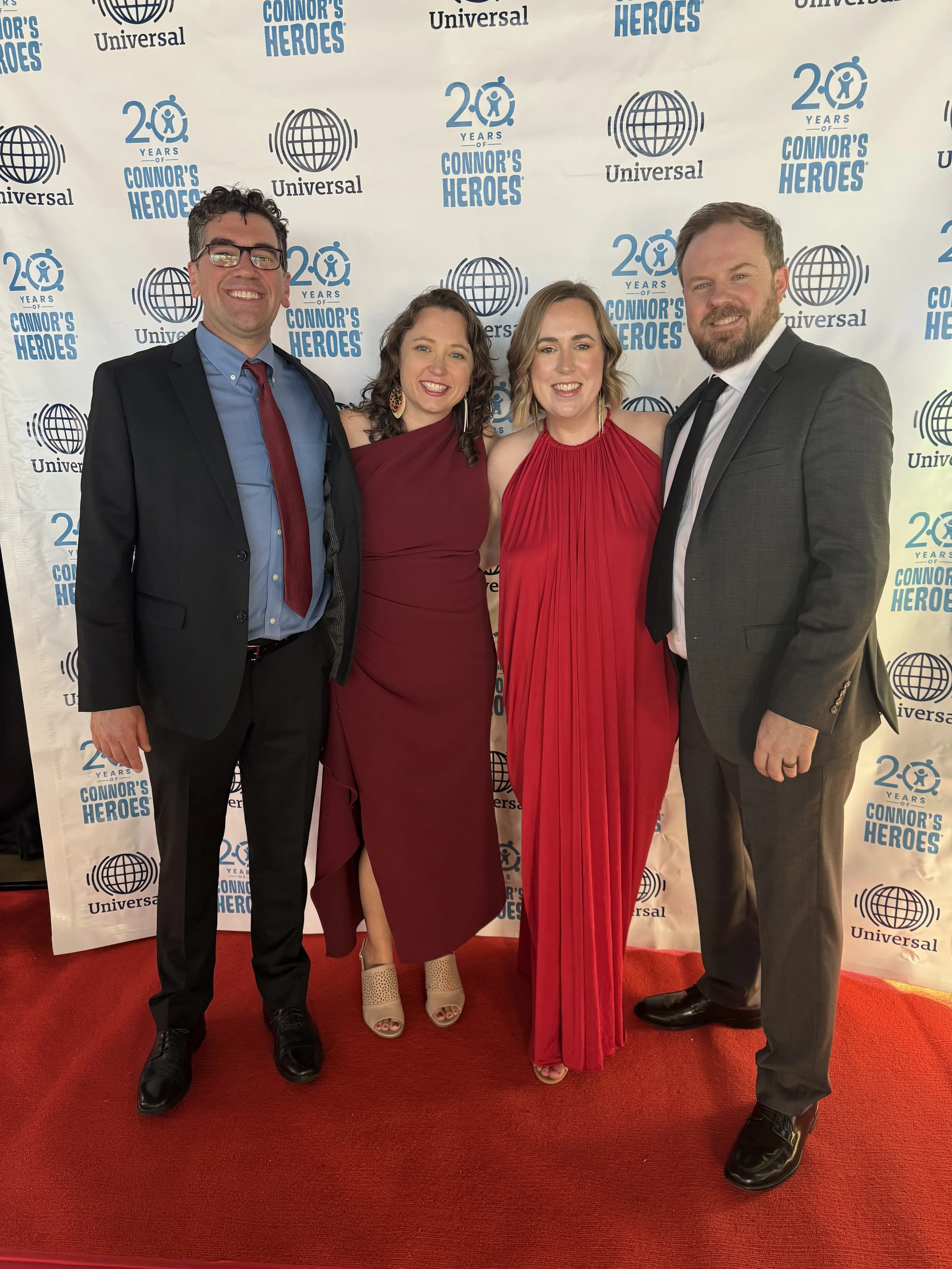
My husband and I with Elizabeth and Joe Matthews at the Heroes Art Ball on May 1, 2026.
Vol 5. The leadership of abundance
"You didn't see me on television, you didn't see news stories about me. The kind of role that I tried to play was to pick up pieces or put together pieces out of which I hoped organization might come. My theory is, strong people don't need strong leaders."
— Ella Baker
Many years ago, a racial justice facilitator recommended I read the biography of Ella Baker. One of my biggest takeaways was how she understood the liberation of each of us as connected to the liberation of all of us. She also deeply resisted the model of charismatic, spotlight-seeking leadership, rarely speaking of other prominent movement leaders. She saw what was needed and did it and she believed in the power of grassroots people to lead themselves.
In a culture where many leaders can lean toward power-hoarding, she demonstrated the opposite.
This touches on something I really admire in those who demonstrate what I see as authentic leadership. The most admirable leaders I know are pouring themselves into leading through and with others, pulling people upward, pushing from behind. Everyone around them is rising into leadership. Sometimes in organizing, we talk about success being organizing ourselves out of a job.
As a leader, I want to see the people I'm leading succeed in their own right. I want to see them get credit for their contributions, and for them to see a path towards greater ownership within their zone of genius. That, to me, is an abundance mindset. There's enough for all of us to thrive, to collaborate, and build together. The more all of us take on, the more we can accomplish collectively.
Occasionally, I see evidence of the flipside of this in my work. Often what I see show up is evidence of a scarcity mindset. It can show up as evidence of a fear of other people's agency.
A manager wants to take on more, but their own manager keeps circumventing them, or inadvertently takes ownership of their ideas. Or perhaps, its a manager who sees an opportunity to take initiative on a project they’re interested in, and have the skills for. Instead, they are met with resistance and an ask to stop working on the project.
Most of the time I think (I hope?) this behavior is unintentional. The managers in these kind of situations might be well-meaning. But rather than uplifting their direct reports' ideas with appropriate attribution, or giving them a green light to work on a project they care about, they put up a roadblock. The effect, intentional or not, is that it diminishes people. It makes people feel small and it discourages future leadership behavior.
These kinds of behaviors can contribute to a real experience of loneliness at work. When I connect with a client going through something like this, they're often weighing whether it's a "big enough deal" to say something about. Addressing it with their manager may come with its own costs. They worry the conversation won't go well, or that it might damage a relationship. Sometimes, they fear for their jobs.
That calculation isn't mine to make. But I do ask them to consider this: what if giving direct feedback is actually an investment in the relationship? A way of saying I care about this enough to have a harder conversation so things can be better long-term. Is it safe enough to try? If not, how can you show up authentically during challenging circumstances so that you’re not sacrificing your wellbeing?
What I keep coming back to is this: I want to see leaders at every turn asking what can I do to support the emerging leadership of my team? Acting with humility and abundance. Demonstrating emotional intelligence.
The type of leadership managers demonstrate to their teams often makes or breaks that team’s experience of work. I believe that if more organizations invested in providing managers with “facilitative” leadership skills, we wouldn’t be facing such a burnout crisis in our sector.
As I reflect on all of this, I’m remembering Shine Theory, popularized by Aminatou Sow and Ann Friedman: "I don't shine if you don't shine."
What would change in your organization if that were the operating principle?
What if we didn’t see others’ leadership as diminishing our own, but instead, as amplifying it?
If you’re looking for support on how to build this kind of culture of leadership in your organization, I’d be happy to chat.
I'm grateful to have you along for this exploration of leadership and organizing. If these reflections resonate with you, please consider signing up to receive future installments in your inbox.
In solidarity,
Michaela