
Vol 3. On power and participation
On pedestals
My husband and I recently returned from a restorative trip to the Southwest where we soaked in the art, culture, history, and food.
I'd long looked forward to visiting the Georgia O'Keeffe museum. She's been an artistic inspiration since grade school. What struck me most, though, was the unexpected way the museum is reframing her legacy.
I knew the landscape around Santa Fe had profoundly shaped O'Keeffe and her art over many decades, but I didn't fully grasp her sense of ownership over it until I visited the museum. "As soon as I saw it," she said, "that was my country.” And, of the mountain Cerro Padernal, a favorite subject of her paintings, she said, "It's my private mountain. It belongs to me. God told me if I painted it enough, I could have it.”
As this recent NPR story about her legacy noted, “That played well among her legions of admirers, but not so much in northern New Mexico among the Tewa, the indigenous people that include the Pueblo Indians.” The current exhibition that we visited, Tewa Nangeh, sheds light on this perspective to visitors. The exhibition highlights the work of many indigenous artists of the region, and acknowledges the sacred connection they have to their ancestral homelands.
The exhibition is eye-opening, confronting visitors with the erasure of indigenous perspectives from the dominant narrative around O'Keeffe's legacy and work. The visit to the Tewa Nangeh exhibit and the nearby Institute for Contemporary Native Art were distinct highlights of our trip.
I'm grateful to the museum for presenting her legacy in all its complexity. It was a reminder that we are often disappointed when we put prominent public figures on pedestals.
Nothing has brought this into sharper relief for me recently than the revelations of devastating abuse by prominent activist and labor leader Cesar Chavez, one of the co-founders of the United Farmworkers, an organization and figure that’s played a large role in my personal education about organizing. The news of his sexual abuse of girls and women, including co-founder and fellow organizer Dolores Huerta, is devastating. Huerta, and many of the survivors of his abuse, believed so greatly in the impact of their movement, that it led them to stay silent for so long. In her statement, Huerta says “I am nearly 96 years old, and for the last 60 years have kept a secret because I believed that exposing the truth would hurt the farmworker movement I have spent my entire life fighting for.”
My heart breaks for Huerta and the other survivors, that they believed so deeply in their movement that they felt they had to protect it at such devastating personal cost. This is all too common in activist and organizing spaces. For too long, commitment to a mission has been used to shield powerful people from accountability, whether they're organizational leaders, politicians, or major donors.
This revelation has made me reflect on the spotlight of this series, which has been focused on the teachings of Fred Ross Sr., the organizer credited with recruiting and training Chavez to lead UFW. I want to be transparent about that choice and what it means now. I can't speak to what Ross knew or enabled, but I do know these behaviors rarely go unnoticed by those closest to them. People in proximity to power often hold some of that power themselves, including the power to protect it. I find myself wondering whether Ross played any role, intentional or not, in creating the conditions that kept people silent for the sake of the movement. I'll likely never know. But in my experience of other movement spaces, this kind of complicity in proximity is more common than we like to admit.
What I do know is that I'm choosing to pivot the focus of my series to women and non-binary organizers moving forward. Starting today with Dolores Huerta herself.
Vol 3. of leadership lessons from grassroots organizing:
On power and participation
“We just have to convince other people that they have power. This is what they can do by participating to make change, not only in their community, but many times changing in their own lives. Once they participate, they get their sense of power.”
- Dolores Huerta
Huerta's words stay with me: Power is something you step into by participating. That framing feels especially important right now, when so many of us are grappling with the fact that the leaders we have trusted to hold power aren’t always worthy of it. If one of the lessons of Chavez's abuse is that concentrating power in one person is dangerous, then Huerta's quote offers an antidote: distribute it. Many smart people have been advocating for this for a very long time, it’s not a new concept, yet it’s one we must regularly practice into being.
Huerta's quote points to something I think about regularly in my coaching. There's a transformation that happens between when someone is a seasoned executor or independent contributor to when they begin to take ownership in organizational leadership. They don't need an official title, they just need encouragement and the permission to step into their own power.
I’ve talked to many employees who have become victims of their circumstances. They are upset with the status quo in their organizations and see a possibility for a better way, but they believe it is someone else’s job to fix it. Perhaps, yes, it is technically “officially” someone else’s job to fix it, but that does not mean there’s not an opportunity to have influence in the situation.
I hold the belief that there’s always some avenue to influence change, though it may not be the path that is most obvious. Sometimes, the most obvious path isn’t safe.
I've been working with nonprofit leaders at the top who are at this inflection point. They're frustrated with team members who can spot every problem but rarely offer constructive paths forward. I hear it often: "They're so smart, but they just complain. They never bring solutions."
This is what happens when people have learned that their ideas don't matter, or that speaking up has costs. The frustration leaders feel about it is actually a signal that those team members are engaged enough to notice what's broken. The leadership development opportunity is to help them see that noticing isn't enough, and that they have more power to act and influence than they may think.
But that opportunity belongs to the leader too. If you want emerging leaders on your team to get proactive about proposing solutions, you have to make it safe for them to do so. That means a few things in practice.
First, watch how you respond when someone brings a complaint. If your reaction, even subtly, signals that problems are unwelcome, people will stop bringing them. The goal isn't to open the floodgates to venting, but to treat a complaint as an opening. Try asking: "What ideas do you have about how we could move forward?" or "What's one thing we could implement that would make a difference?" You're not obligating yourself to act on every answer, but you're inviting them into the solution.
Second, notice if you’re participating in the complaints yourself. Leaders who commiserate with their teams about problems they have the power to address erode trust over time, even when it feels like bonding in the moment. It signals that change isn't possible, which is exactly the belief you're trying to disrupt.
And structurally: create regular, low-stakes spaces for people to bring ideas forward. Real conversations where input is genuinely considered and people can see what happened to their ideas. That visibility is what builds the belief that participation is worth it.
But I also want to acknowledge a harder reality: what if you genuinely don't hold power? What if a direct conversation with your boss isn't safe — because of retaliation, because of identity, because of the particular culture you're operating in?
This is where Huerta's framing matters to me. She's talking about building collective power through participation: finding others who see what you see, taking small visible actions, shifting conditions gradually. The path forward isn't always a direct line. Sometimes it's lateral. Sometimes it starts outside the organization entirely: in a community, a peer network, a union, a coalition.
I recently had a conversation with a leader who was feeling frustrated and stuck, resigned to conditions they didn't agree with but didn't believe they could change. Through our conversation, they realized there was one concrete step available to them: bringing an idea directly to their boss, an idea they hadn't seen as an option until we talked through the situation together. It wasn't a radical act. But naming it as something within their control shifted something. They left the conversation more motivated and clear. They had claimed a small piece of power back.
Even the smallest actions can be radically empowering, not because they fix everything immediately, but because they change you. They remind you that you are not just a recipient of circumstances. You are someone who acts.
Where in your work or community are you waiting for someone else to fix something you already know needs fixing? What's one small step you could take this week, not to solve it entirely, but just to participate in its resolution?
I'm grateful to have you along for this exploration of leadership and organizing. If these reflections are valuable to you, please consider sharing them with a friend who might benefit. And if you’d like to continue the conversation, you can always reply to this email. I read every response.
In solidarity,
Michaela

Georgia O’Keefe: Corn, No.2, 1924
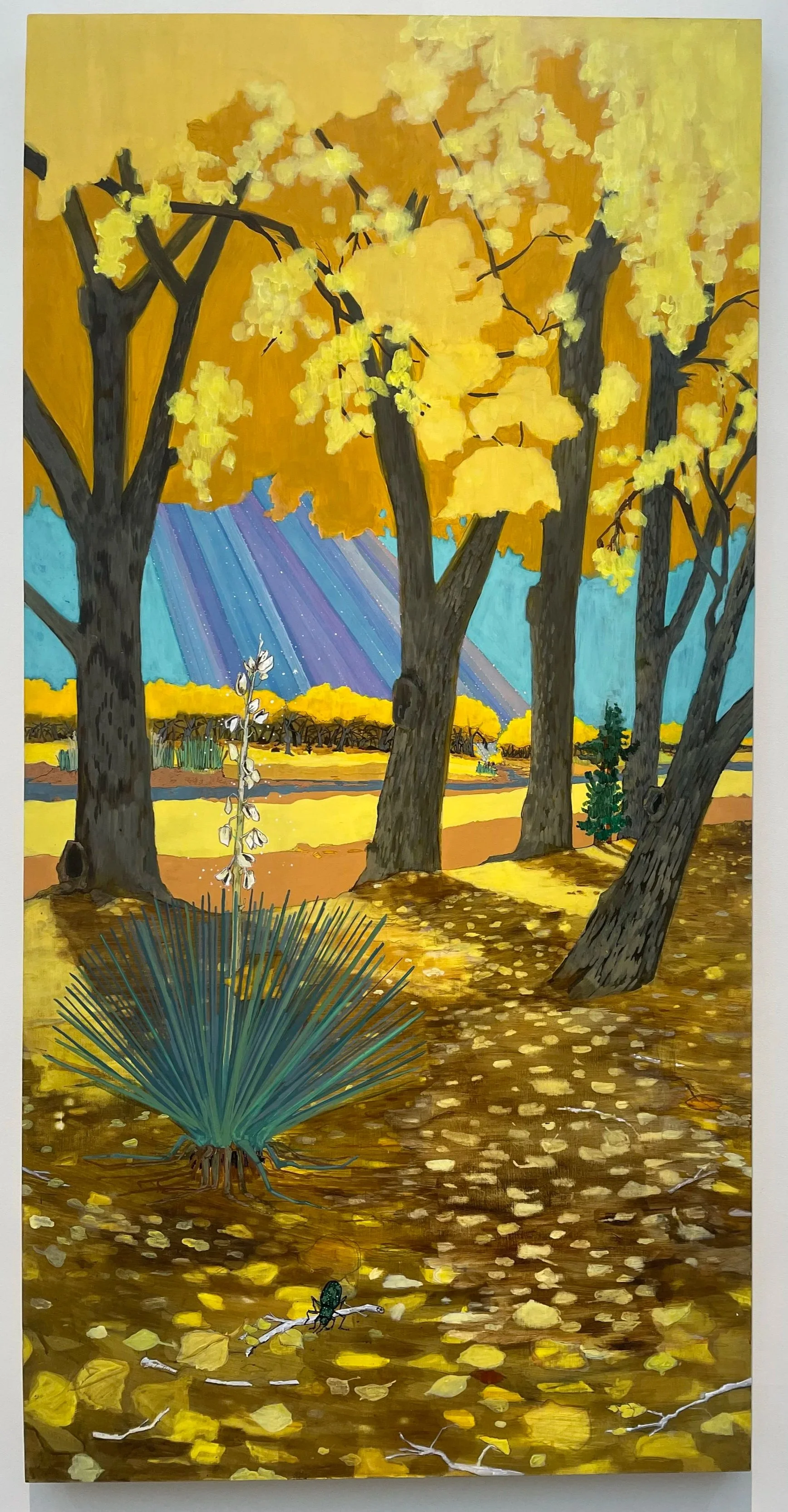
Eliza Naranjo Morse (Kha’p’o Owingeh / Santa Clara Pueblo): A Story of Stardust, Part 2, 2025